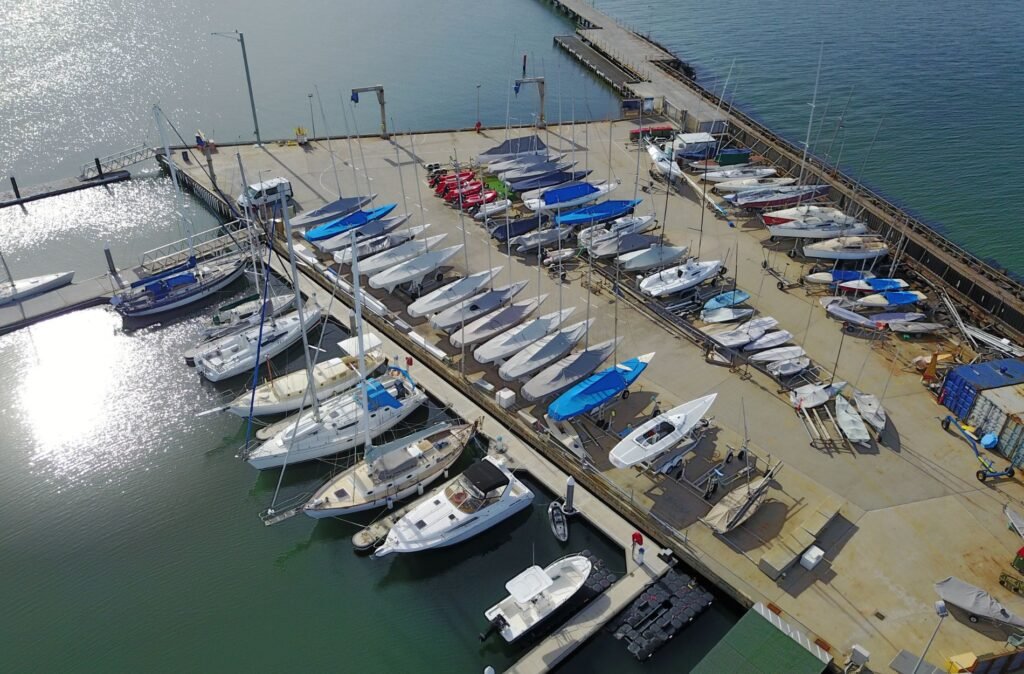
A boat storage facility offers secure parking spaces and enclosed drive-up units tailored for personal watercraft. Its function is to safeguard your vessel during the off-season by minimizing exposure to hazardous environmental conditions. Here is more information about the different types of boat storage facilities:
Self-Storage Boat Space
A self-storage boat space is a facility where customers store their boats and trailers in designated units or parking areas. Each customer is assigned a specific space within the facility. Customers typically have access to their stored boat or trailer during the facility’s posted access hours, subject to facility rules. Storage spaces are offered in different sizes to accommodate various types of boats and trailers.
Drive-Up Indoor Storage
Drive-up boat storage facilities typically provide individual storage units with doors that open directly onto outdoor drive aisles. Customers can back their boat and trailer into an assigned unit and then disconnect and secure the trailer inside the space, following facility procedures. These units are often used for smaller to mid-sized boats, such as speedboats, skiffs, or personal watercraft, depending on the unit dimensions. Because the boat is stored inside an enclosed unit, it is generally protected from direct exposure to weather conditions such as snow, rain, and wind. Accessing the unit during open hours allows owners to retrieve or inspect their boat as needed.
Climate-controlled boat storage is a type of drive-up storage designed to protect watercraft from extreme changes in temperature and humidity. These units maintain more stable temperature and moisture levels compared to standard units. By reducing excess humidity, climate-controlled environments help limit moisture-related issues such as corrosion, mold, and mildew inside the boat. More consistent conditions can also reduce stress on materials that will expand or contract with temperature fluctuations, helping prevent cracking or other forms of wear over time.
Covered Boat Storage
Covered boat storage is typically an open-air parking arrangement with a roof structure overhead that provides protection from direct sun, rain, and falling debris. This design keeps boats easily accessible while offering more weather protection than fully uncovered outdoor storage. Because these spaces usually have higher clearance and no side walls, they accommodate larger watercraft such as pontoons and wakeboard boats. The open-sided layout also allows for easier maneuvering when parking and retrieving boats. In many cases, boats can be stored on their trailers without removing features such as wakeboard towers or similar equipment, as long as the overall height fits within the covered structure.
Outdoor Boat Storage
Open-air boat storage provides a designated parking space within a facility that is not covered or enclosed. Because these spaces have no roofs or walls, they typically offer the greatest flexibility for accommodating larger or taller vessels. This layout allows owners to store boats with higher profiles without needing to remove fixed structural components.
To help protect the boat from environmental exposure, owners often use a fitted boat cover or canvas. This helps reduce the buildup of dirt and debris and helps protect upholstery during periods of non-use. Clients should prepare their vessels for outdoor storage by completing the following:
- Winterizing the engine
- Removing the drain plugs
- Disconnecting the battery
Explore Boat Storage Facilities
Storage facilities offer different types of boat storage designed to protect vessels during periods of non-use. Choosing the right option depends on your boat’s size and the level of protection needed from weather and environmental exposure. Contact a reputable self-storage company to learn more about their services.
- The Role of Parking Garages in Reducing Traffic Congestion
- Understanding the Different Types of Boat Storage Facilities Available
- Tips for a Successful Bed Liner Spray Kit Application
- How Car Loan EMI is Calculated (With Example) – A Simple Human-Friendly Guide
- How to Increase Car Engine Life Naturally